How to Prepare Antique Furniture for a Move
- Home
- »
- Special Items Move
- »
- How to Prepare Antique Furniture for a Move
Antique furniture needs different handling before the crew even arrives, not just during the move. Old joints, fragile veneer, and finishes that react to plastic wrap all need prep that modern furniture doesn’t. Take apart what’s designed to come apart, protect the finish correctly, and give the piece time to adjust to a new temperature before it’s packed tight.
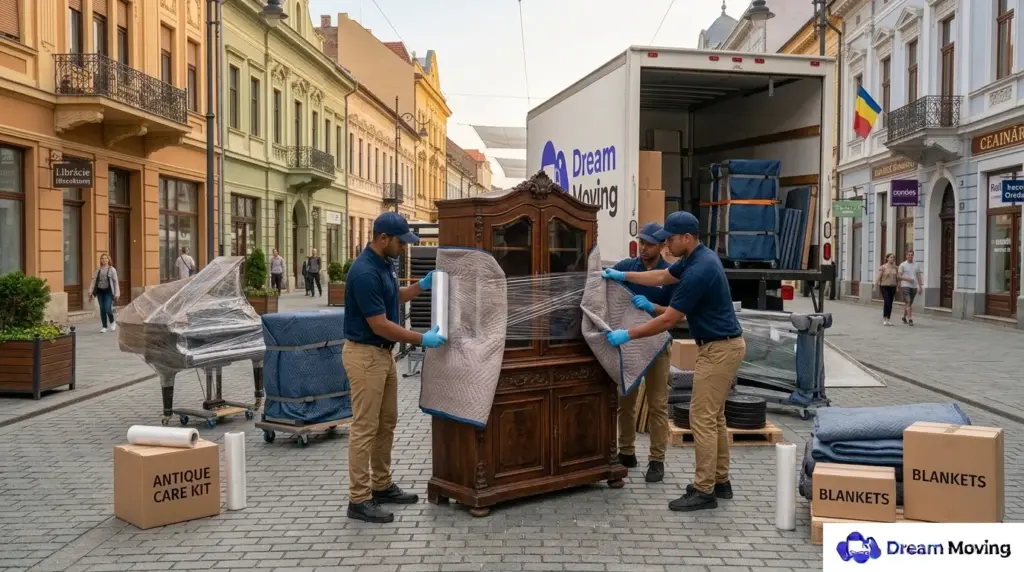
Remove What Comes Apart, Don’t Force What Doesn’t
Drop-leaves, removable legs, and mirrors off dressers should come off and travel wrapped separately, but don’t force a joint that isn’t designed to separate.
Many antique pieces have parts that were built to detach, a leaf on a table, a mirror bolted to a dresser, finials on a bed frame. Removing those reduces the leverage and stress on the piece during the carry. What you shouldn’t do is force apart a joint that was glued, not built with hardware, since antique glue and joinery weren’t designed to be taken apart and reassembled repeatedly.
Protect the Finish Before Anything Touches It
Don’t put plastic wrap directly against an old finish. It traps moisture and can haze or soften it.
Modern furniture finishes are built to handle plastic wrap and tape. Older finishes, especially shellac or lacquer from before a certain era, react differently to trapped moisture and can cloud or soften under plastic left on too long. A breathable layer, like a moving blanket or padding, against the wood, with plastic only as an outer layer, protects the piece without damaging the finish underneath.
Let the Piece Acclimate, Don’t Rush It
Give an antique time to adjust to a new temperature before it’s packed tightly or placed near heat or direct sun.
Moving a piece straight from a cold truck into a heated apartment, or the reverse, stresses old glue joints and veneer that have already had decades to settle into one environment. The same acclimation logic that applies to a piano before tuning applies here: let the piece sit at the new temperature for a while before it’s unwrapped and placed in its final spot.
A related question worth checking is specialty mover.
Prep Step | Do | Avoid |
Removable parts | Detach legs, leaves, and mirrors; wrap separately | Forcing apart glued joints not built to separate |
Finish protection | Use a breathable blanket layer, plastic only as an outer wrap | Plastic wrap directly against an old finish |
Temperature change | Let the piece adjust before unwrapping | Placing it near heat or direct sun right after the move |
Dream Moving handles antique furniture as a special item move across all five boroughs. Contact us at (212) 994-4941 and describe the piece so we can plan the right handling.