

What to Know Before Moving to Westchester County?
- Home
- »
- Local Moving
- »
- What should you know before moving to Westchester County?
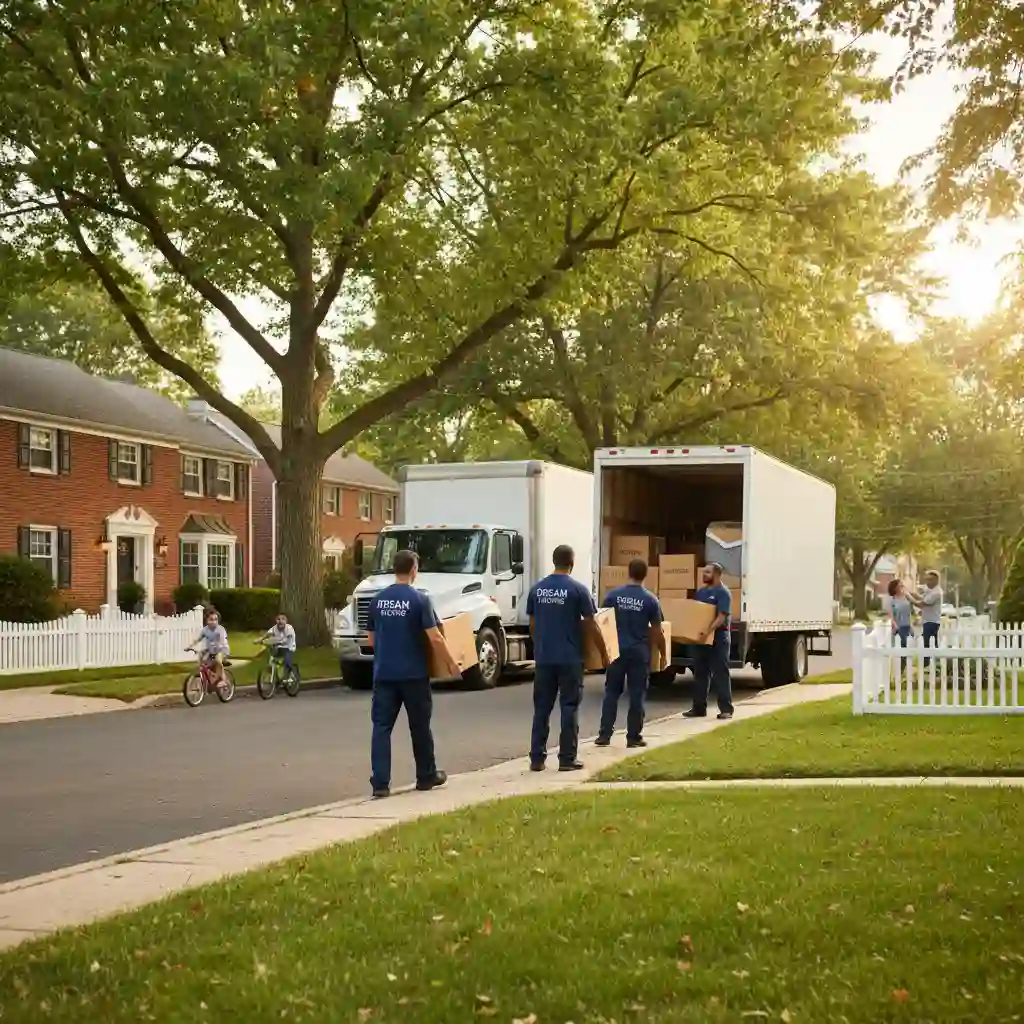
Three things matter most before moving to Westchester County: commercial moving trucks are legally banned from New York State parkways, including the Bronx River, Hutchinson River, and Saw Mill River Parkways; several towns including White Plains require a parking permit for a moving truck; and the right town depends heavily on which Metro-North line gets you back to the city fastest. Long-distance moving services from Dream Moving route trucks around the parkway restrictions using commercial-legal highways. This guide covers the rules that catch DIY movers off guard, the best towns by commute time, and how to choose between Metro-North and driving once you have settled in.
The parkway rule that catches every DIY mover off guard
Commercial vehicles, including rental moving trucks, are legally prohibited on New York State parkways. This is not a minor inconvenience; it is a hard legal restriction enforced because the parkway system was built in the early 20th century for passenger cars, with low stone-arch bridges that were never designed for truck clearance.
Parkway | Commercial vehicle status | Why it matters |
|---|---|---|
Bronx River Parkway | Banned for commercial vehicles | Narrow, winding lanes designed for passenger cars only |
Hutchinson River Parkway | Banned for commercial vehicles | Some of the lowest stone-arch bridges in the system; frequent truck strikes are reported by Westchester officials |
Saw Mill River Parkway | Banned for commercial vehicles | A common source of bridge strikes for northbound drivers unfamiliar with the route |
Taconic State Parkway | Banned for trucks, buses, and vehicles over 8 feet tall | Extends the restriction further north through Westchester, Putnam, and Dutchess counties |
New York State’s own published guidance states that low stone bridges across the parkway system have posted clearances as low as 6 feet 11 inches. A standard moving truck, including most rental cargo vans with a high roof, will not clear that height. The legal commercial routes around Westchester are I-87 (the Major Deegan and New York Thruway) and I-95 (the New England Thruway), both built to commercial highway standards with adequate clearance.
If you are renting a truck yourself rather than hiring a professional mover, plan your route on I-87 or I-95 before you leave, not when a low-clearance warning sign appears ahead of you on a parkway on-ramp.
Parking permits and street rules in Westchester towns
Unlike NYC, where double-parking a moving truck is a common, if risky, practice, several Westchester municipalities enforce parking rules more strictly and require advance coordination.
- White Plains: the city operates its own Department of Parking with a dedicated permit system. Commercial vehicle permits are issued separately from standard resident permits, and the city’s municipal garages restrict commercial vehicle access, which makes a temporary street permit the relevant option for a moving truck loading near a downtown high-rise. Contact the White Plains Department of Parking directly to confirm the lead time and cost for your specific address.
- Other municipalities: parking enforcement intensity varies by town. Scarsdale, Bronxville, and New Rochelle each have their own local ordinances. Confirm directly with the town’s police department or parking authority whether a residential street requires any notice before a moving truck can park or block a lane, since rules and required lead times differ by municipality and are not standardized countywide.
The safest practice for any Westchester move is to confirm parking requirements with the destination town at least one to two weeks before move day, since processing times vary by municipality and some require in-person coordination rather than an online application.
Best Westchester towns for NYC commuters, by commute profile
Westchester’s Metro-North lines (Hudson, Harlem, and New Haven) define the commute experience more than highway access does for most residents who still work in Manhattan.
Town | Metro-North line | Commute profile |
|---|---|---|
Tarrytown | Hudson Line | Hudson River views and a walkable downtown; a popular choice for residents who want a village feel with rail access to Grand Central |
White Plains | Harlem Line (express service available) | The county’s commercial hub, with frequent express trains; appeals to professionals who want urban density without living in the city |
New Rochelle | New Haven Line and Amtrak access | One of the more multi-modal transit hubs in the county, useful for commuters with destinations beyond Manhattan |
Scarsdale | Harlem Line | Known for highly rated schools and large historic homes on narrow, winding residential streets |
Bronxville | Harlem Line | A small, walkable village with strong schools; similar narrow-street profile to Scarsdale |
Scarsdale and Bronxville’s narrow, winding residential streets are the most common reason a full-size moving truck cannot pull directly up to a front door in this part of the county. A shuttle approach, where a smaller vehicle ferries items from a larger truck parked on a nearby wider street to the home itself, is the standard solution professional movers use in these neighborhoods to avoid damaging lawns, driveways, or low-hanging tree branches.
Commuting to NYC from Westchester: Metro-North vs. driving
Commute mode | Advantages | Drawbacks |
|---|---|---|
Metro-North Railroad | Reliable published schedules; express service on some lines reaches Grand Central in well under an hour from southern Westchester stations | Fares add a recurring monthly cost; schedule is fixed rather than flexible to your own timing |
Driving (I-87 or I-95 corridor, or local roads to a station) | Full flexibility on timing and route; useful for trips that do not end in Midtown | Manhattan-bound traffic on the Major Deegan and connecting bridges is frequently heavy during standard commute hours; parking once in the city adds cost and time |
Most Westchester residents who commute regularly to Manhattan use Metro-North for the trip itself and a car for getting to and from the station and for trips that do not involve the city. Check the specific express schedule for your destination station before choosing a town, since express service availability and frequency vary meaningfully between stations on the same line.
How Dream Moving handles a move into Westchester County?
Dream Moving serves Westchester County as part of its Hudson Valley coverage area, in addition to its core NYC service territory. Routes into Westchester are planned on commercial-legal highways (I-87 and I-95) to avoid the parkway restrictions entirely. For homes on narrow residential streets in towns like Scarsdale and Bronxville, a shuttle vehicle is used where the main truck cannot safely approach the property directly.
For renters moving from an NYC apartment, including an Astoria walk-up, to a Westchester home, the move typically combines a standard local-style loading process at the origin with the longer-distance routing and town-specific parking coordination described above at the destination.
Frequently Asked Questions about moving to Westchester County
Can a moving truck drive on the Hutchinson River Parkway?
Do I need a parking permit for a moving truck in Westchester?
What is the best Westchester town for a fast commute to Manhattan?
Why are Scarsdale and Bronxville streets difficult for moving trucks?
Should I take Metro-North or drive to commute from Westchester to NYC?
Does Dream Moving handle moves into Westchester County?
Related reading
For renters moving out of an NYC apartment as the first half of a move into Westchester, the full local moving cost and process guide for the origin side of the move is covered in how to find affordable moving companies near Astoria.