

No Elevator in Your NYC Building? Here Is What Moving Day Looks Like.
- Home
- »
- Brownstone Moving
- »
- No Elevator in Your NYC Building? Here Is What Moving Day Looks Like.
A significant share of NYC residential buildings have no elevator, which makes walk-up moves a standard part of local moving here. Dream Moving handles no-elevator buildings across the city, from five-story brownstones in Brooklyn and the Bronx to pre-war walkups in Astoria, Harlem, and the Lower East Side. Before your moving day, here is what actually affects how a walk-up move goes, and what you can do on your end to make it faster and safer.
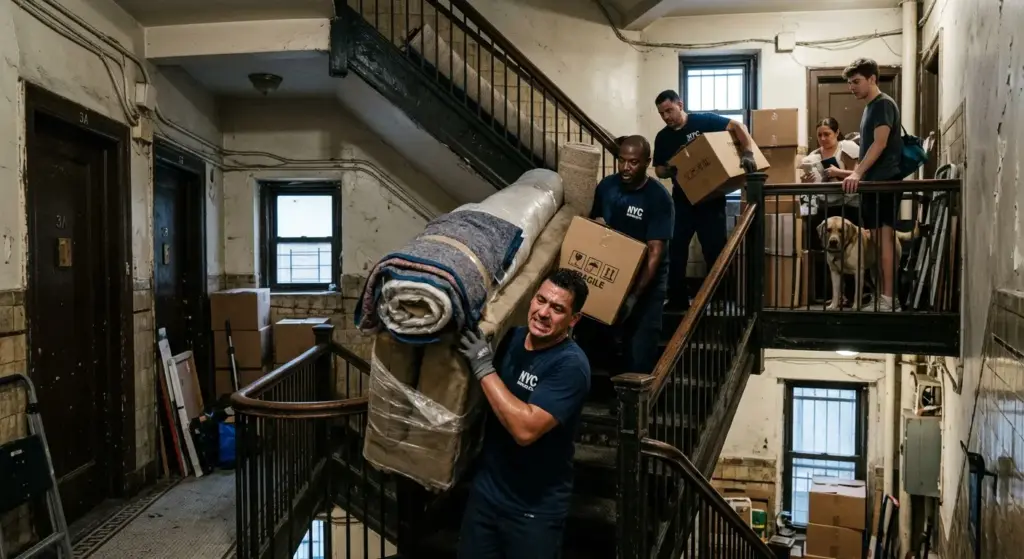
What Movers Actually Deal With in a Walk-Up Building?
Stairs are only part of the challenge. The real variables in a walk-up move are the stairwell width, the ceiling height on the landings, and the angle of the turns between floors. These determine what can be carried straight and what needs to be angled, tilted, or partially disassembled.
A tight 90-degree turn on the second-floor landing can make a standard sofa impossible to carry upright. A staircase that is 36 inches wide on the straight sections may narrow to 30 inches around the turn. Experienced movers read these dimensions on arrival and adjust technique before they start, not in the middle of a carry.
NYC’s pre-war building stock is particularly varied. Buildings from the 1920s and 1930s sometimes have wider stairwells than buildings put up in the 1950s and 1960s, which were often built with elevator access in mind and tighter staircase dimensions as a result. If you are moving into or out of a building you have not measured personally, there is a real chance the movers will encounter a tighter fit than expected.
How Dream Moving Handles No-Elevator Buildings?
Dream Moving’s local moving service in New York City includes walk-up buildings at no extra surprise charge. When you request a quote, tell the team your floor number, whether there’s a service entrance or rear staircase, and whether the main staircase has any tight turns or low clearances you’re aware of. That information goes into the quote and into the crew’s planning before they arrive.
Crew arrive with the right equipment for stair work: shoulder straps for heavy lifts, two-wheel dollies for items that can be tilted, and moving blankets to protect both the item and the walls. For tight stairwells, smaller items are carried individually rather than stacked, which takes longer but prevents damage.
If you’re in a Brooklyn or Bronx brownstone with a specific entry configuration, Dream Moving’s brownstone moving service covers those jobs with crew who are familiar with the typical floor plans and staircase layouts in that building type.
Does a Walk-Up Cost More?
Yes, in most cases, though how much more depends on the specific job. Walk-up buildings take longer than elevator buildings of the same size, and time is the primary driver of moving costs. The added labor for carrying items up multiple flights is factored into the flat-rate quote upfront. You will know the number before the crew arrives, not after.
The floor level matters significantly. Moving to a second-floor apartment takes noticeably less time than moving to a fifth-floor one. Buildings with a service entrance at the rear, or with a freight entrance that allows a shorter carry from the truck, can offset some of the additional time.
There is no industry-standard surcharge formula for walk-up buildings. What you pay is specific to your move, which is why the quotes from Dream Moving are done on a per-job basis rather than by a standard hourly rate.
What You Can Do Before the Crew Arrives?
Disassemble Large Furniture
Bed frames, large shelving units, and dining table bases that unscrew often cannot be carried in assembled form around tight staircase turns. If you can break them down before the crew arrives, you save time and reduce the risk of damage. Dream Moving crews can assist with disassembly, but doing it in advance is faster.
Know Your Building’s Moving Rules
Many NYC buildings have specific rules about moving times, elevator pad requirements (even for walk-up buildings that have one freight elevator), and parking access. Check with your building superintendent or management office before your move date, not the morning of.
Keep the Staircase Clear
Other residents using the staircase during your move creates a safety issue and slows the job. If you can give your neighbors advance notice through building management or a note in the lobby, most will try to accommodate.
Have a Clear Path at Both Ends
The route from your apartment door to the top of the staircase, and from the bottom of the staircase to the truck, both matter. Furniture in the hallway, boxes stacked near the door, or bikes blocking the entrance all slow the crew and increase the time on the job.
Walk-Ups and Last-Minute Timing
Walk-up moves can be booked on short notice when availability allows. If you need movers for a no-elevator building quickly, see the urgent moving service page and call (212) 994-4941 to check same-day or next-day availability. Include the floor number and staircase details when you call so the team can confirm the right crew size from the start.
Studio and Small Apartments in Walk-Up Buildings
A significant number of walk-up moves in NYC involve studio apartments or one-bedroom units with a limited number of large items. For these jobs, the studio apartment movers service is often the right fit, with crew and vehicle sized for the actual volume of the move rather than a full-apartment setup.