

Moving Companies in Astoria That Handle Fragile and Antique Items
- Home
- »
- Local Moving
- »
- Are there any moving companies in Astoria that specialize in fragile or antique items?
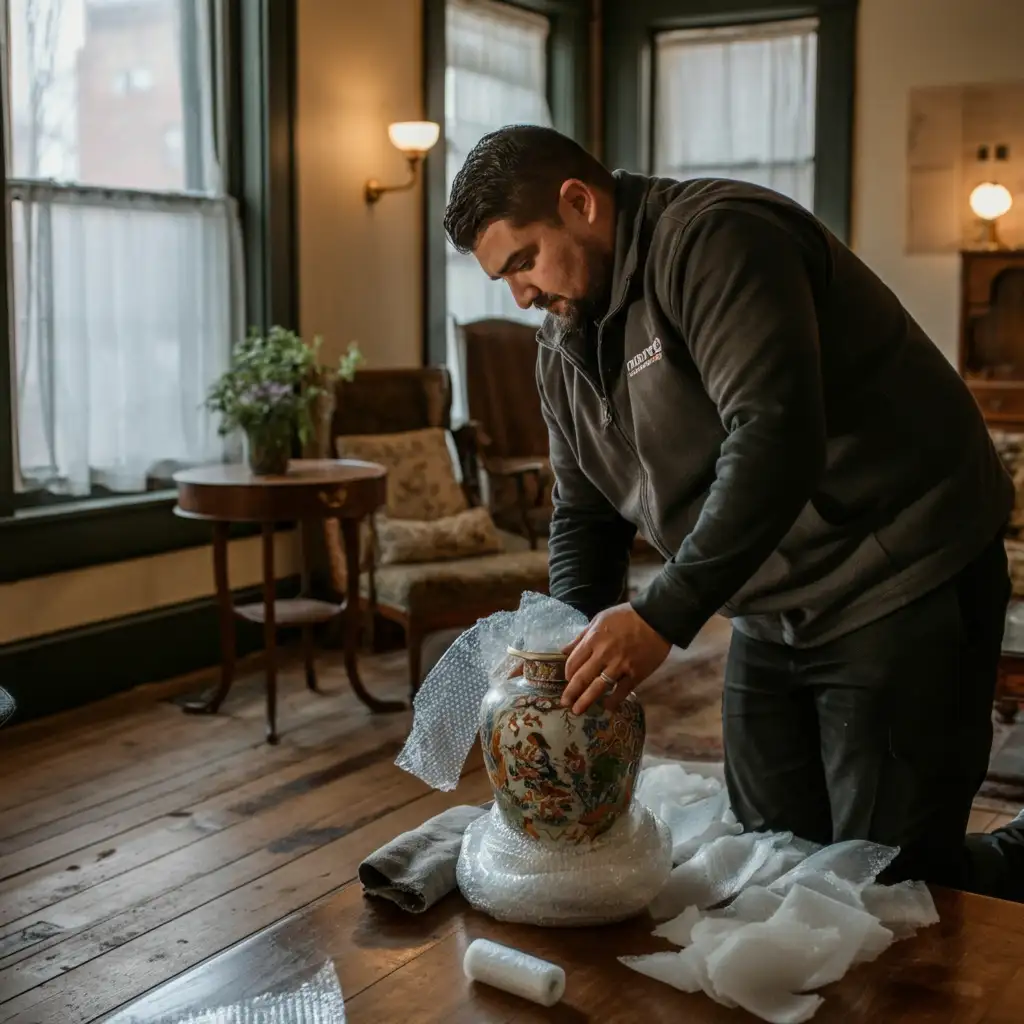
Dream Moving handles fragile and antique items as part of its special item movers service, operating from its Astoria base at 24-13 45th St (USDOT 3524817). The service covers antique furniture, paintings and artwork, porcelain and ceramics, mirrors, sculptures, grandfather clocks, and high-value decorative objects. Each item is assessed before pack day to determine the correct wrapping materials, carrying technique, and whether custom crating is needed. The move is quoted separately from a standard residential job because the materials, crew time, and handling protocol differ.
This guide covers what the fragile and antique moving service in Astoria actually involves at the item level: packing techniques by item type, how to assess whether a mover is qualified, what custom crating covers, what transit protection means in practice, and what to ask before booking.
Moving Made Simple
Get A Free Quote
Within Minutes!
Fragile and antique item types: what each requires at the handling level?
The correct approach for a fragile or antique item depends on the item type. Applying the same technique to a porcelain vase and to a framed oil painting causes damage to one or both. The following covers the distinct requirements for each category.
Item type | Wrapping and packing approach | Transit and placement requirement |
|---|---|---|
Framed artwork and oil paintings | Archival packing paper first (no direct bubble wrap contact on painted surface). Foam corner protectors on all four corners. Cardboard face protection each side. Mirror box or custom flat crate for pieces above 36 inches in the smaller dimension. | Transported vertically, never flat. Secured between padded dividers. No stacking above or against the frame. |
Antique furniture (wood, inlaid, lacquered) | Archival paper on all finished surfaces before the moving blanket layer. Prevents surface contact marks from standard blanket fibers. Additional foam padding on carved or projecting elements. | Loaded last in the truck to minimize contact with other items. Placed against padded truck walls. Leg assemblies removed and packed separately if possible. |
Porcelain, ceramics, and glass objects | Each piece wrapped in two layers of acid-free tissue, then bubble wrap, then placed in a cell box or individually positioned in a double-wall box with 3 inches of crumpled paper on all sides. | Boxes marked FRAGILE on all four sides and the top. Placed on top of the load, never under other boxes. Separated from metal or heavy items in the same load. |
Mirrors (all sizes) | Foam corner protectors, packing paper, bubble wrap, cardboard both faces. Mirror-specific box where available; custom crate for mirrors above 48 inches in either dimension. | Transported vertically. Never flat. Never leaned against non-padded surfaces. |
Sculptures and 3D decorative objects | Assessment determines wrap approach: irregularly shaped pieces require custom foam inserts cut to fit. Projecting elements wrapped individually before the outer layer. | Custom crate for pieces with a replacement value above $2,500 or with geometry that standard wrap cannot protect adequately. |
Grandfather clocks and large mechanical pieces | Movement secured internally before transport (weights removed, pendulum secured). Case wrapped in moving blankets. Transported upright. | Placement confirmed before crew loads. Clock is last item loaded, first unloaded. Position in truck minimizes lateral movement. |
What custom crating covers and when it is required?
Custom crating means a purpose-built wooden box constructed to the exact dimensions of the item being moved. The interior is lined with polyethylene foam cut to fit the item’s specific shape. The crate is sealed, labeled with orientation markers, and handled as a single unit by the crew.
Custom crating is the correct choice for: items with a replacement value above $5,000; items with surface geometries that standard wrapping cannot protect, such as protruding sculpture elements; oil paintings on canvas above 36 by 48 inches, where standard flat crating does not provide adequate rigidity; and any item that must survive a long-distance transit with vibration over several hours.
For a standard Astoria local move of 5 to 45 minutes in transit, custom crating is often not required if the wrap is done correctly and the item is loaded and secured properly. For a move from Astoria to Westchester, Long Island, or out of state, the additional transit time and road vibration raise the risk profile and make crating a sound investment.
Custom crates are quoted separately from the residential move because the materials cost is variable. A crate for a 24 by 36 inch framed painting runs $150 to $300. A crate for a large sculpture or an oversized mirror runs $300 to $600. These figures are confirmed during the pre-move assessment, not added on move day.
Astoria building conditions that affect fragile item moves
Astoria’s pre-war walk-up building stock creates specific challenges for moving fragile and antique items that do not exist in elevator buildings or single-family homes.
Stairwell dimensions
Pre-war walk-up stairwells in Astoria run 28 to 34 inches at the narrowest point, typically at the landing turns between floors. A framed painting in a mirror box that is 36 inches wide must be carried vertically through the stairwell with the leading edge angled to clear the turn. A large antique armoire that cannot be disassembled may not clear the turn at all and requires assessment before the move is scheduled.
The pre-move assessment includes measuring the stairwell width at the tightest turn and comparing it to the diagonal measurement of each large item. Items that cannot clear the stairwell are disassembled or, if disassembly would cause damage, are flagged at booking with an alternate access plan.
Elevator buildings in Astoria
Newer residential buildings in Astoria, particularly along the Ditmars and Astoria Boulevard corridors, have freight elevators with interior dimensions of approximately 48 by 72 inches. A crated painting or a large mirror that exceeds these dimensions in either direction cannot go in the elevator intact and requires a stair carry or a different approach. Freight elevator dimensions are confirmed before the move is scheduled.
Street access and truck positioning
Positioning the truck as close to the building entrance as possible matters more for fragile items than for standard household goods. Every additional foot of carry distance between the truck and the building adds a contact risk. On Astoria streets where a permit is required to park close to the entrance, Dream Moving applies for the NYC DOT street-use permit in advance so the truck can stage directly in front of the service entrance.
How to assess whether an Astoria mover is qualified for fragile and antique items?
Questions to ask before booking
- How does your crew wrap an oil painting on canvas? What comes in direct contact with the painted surface first?
- At what replacement value threshold do you recommend custom crating over standard wrap for a local Astoria move?
- What is your protocol for a large mirror that does not fit in a standard mirror box?
- Do you carry acid-free packing paper, or do you use standard newsprint? (Newsprint contains acids that damage finished wood and paper surfaces over time.)
- Has your crew moved items through Astoria walk-up stairwells with a 30-inch landing turn? How do they handle a piece that does not clear the turn?
- What is included in your insurance coverage for antiques and what is the claims process if damage occurs?
A mover who cannot answer these specifically should not handle your antiques. A mover who can answer them in detail, with specific materials and techniques, is worth booking.
Verify insurance coverage for high-value items
Standard moving company general liability insurance covers damage caused by the crew. The standard released value coverage, which is what many companies include by default, pays $0.60 per pound per article, which means a 10-pound antique worth $3,000 is covered for $6.00. This is not adequate for antiques.
For items above $500 in replacement value, confirm that the mover offers full-value protection or ask what the claims process is and what documentation is required for a high-value claim. Alternatively, check whether your homeowners or renters insurance policy covers items in transit; many do, but the policy terms vary.
What happens during the pre-move assessment for fragile items?
A pre-move assessment for fragile or antique items is a structured review of every piece before pack day. Dream Moving conducts this in-person or by video depending on the complexity of the job. For a standard 1-bedroom Astoria move with three to five fragile pieces, a virtual assessment via video call takes 20 to 30 minutes. For a move involving 20 or more valuable pieces or any piece requiring custom crating, an in-person assessment at the origin address is the correct approach.
The assessment covers:
- Item dimensions and weight for each piece requiring specialty handling
- Surface type and condition: cracked varnish, loose canvas, unstable joints, fragile elements that require stabilization before wrapping
- Stairwell and door clearance at both origin and destination for every large piece
- Wrap materials required for each item: archival paper, acid-free tissue, bubble wrap, foam inserts
- Whether custom crating is recommended for any piece, with an estimated cost
- Truck loading sequence to minimize contact and movement during transit
The outcome of the assessment is a written inventory with handling notes for each piece. The crew references this inventory on move day. Nothing is wrapped or loaded without having been assessed first.
Storage for antiques and fragile items during an Astoria move
Antiques and fragile items stored between a move-out and move-in date require climate-controlled conditions. Wood furniture expands and contracts with humidity changes. Oil paintings on canvas are sensitive to both temperature and relative humidity. The standard non-climate-controlled self-storage unit in Queens operates at ambient temperature, which can reach 95 degrees Fahrenheit in August and drop below freezing in January. This is not an acceptable storage environment for antiques. Dream Moving’s climate-controlled storage maintains consistent temperature and humidity year-round. Items go directly from the move-out address into storage and are delivered to the new address when it is ready.
For long-distance moves from Astoria where the destination is not yet ready for delivery, storage-in-transit holds items at the destination city’s climate-controlled facility. This avoids having antiques sit in a truck overnight or longer.